
Why Chinese Buyers Matter More to Global Property Markets Than Ever
For overseas property developers, Chinese buyers are no longer a niche audience. They are a strategic market with growing purchasing power, international outlook and increasingly sophisticated expectations.
The opportunity extends beyond ultra-luxury real estate. Buyers from China’s tier-one and economically stronger cities are looking overseas for several reasons: education, lifestyle, family mobility, long-term security and asset diversification. Some are purchasing a home for their children studying abroad. Others are evaluating investment property, second homes or assets that provide geographical and currency diversification.
This makes Chinese buyers relevant across a wider range of global markets, from London, Sydney to Bangkok, Kuala Lumpur, or Dubai.
A visible presence in key property markets
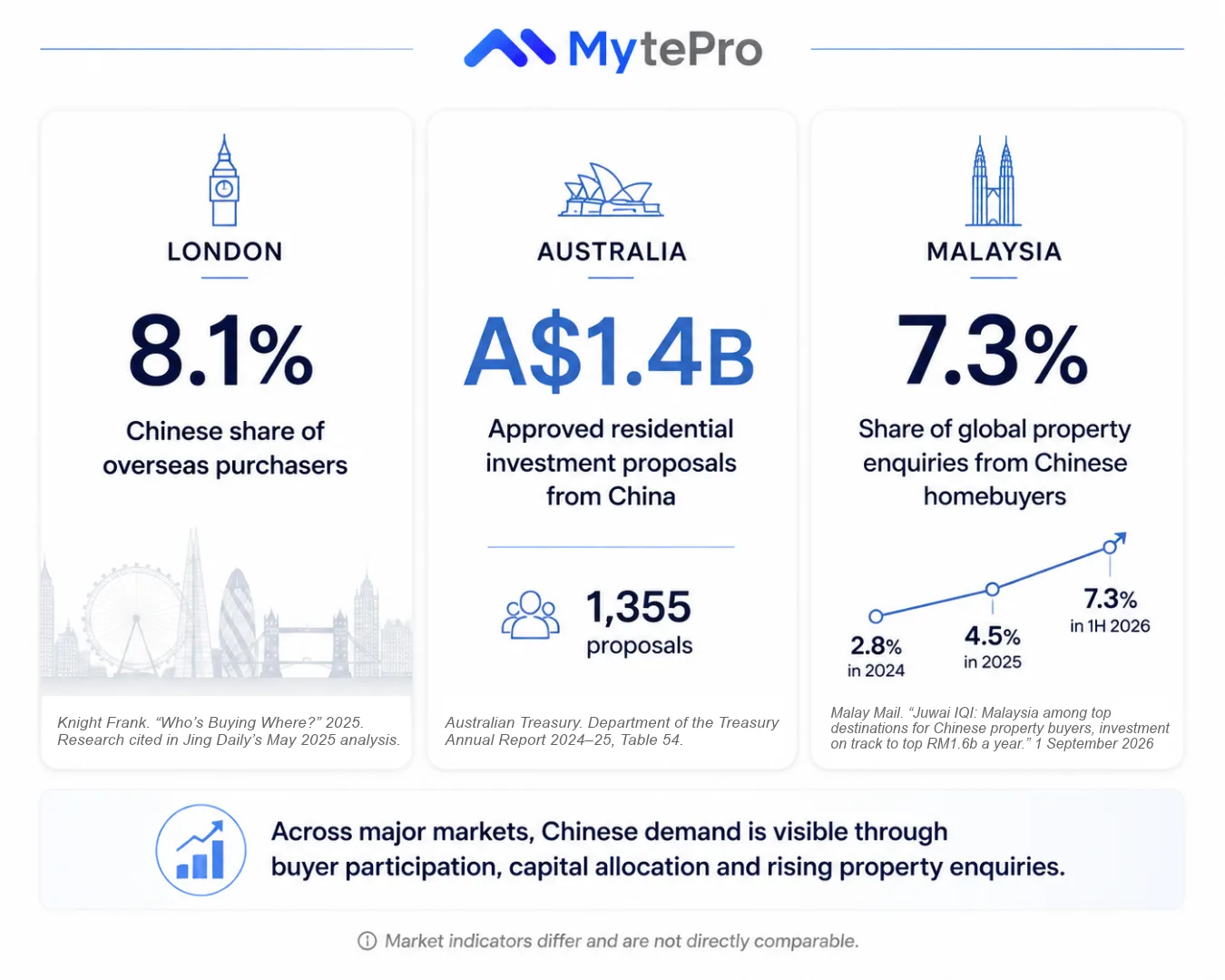
London provides one clear indication of the Chinese market's importance. Knight Frank research cited in a 2025 analysis by Jing Daily found that Chinese buyers accounted for 8.1% of overseas purchasers in Prime Central London in the fourth quarter of 2024, making them one of the capital’s largest international buyer groups. Other than expensive, luxury properties, buyers are increasingly considering new-build and outer-London locations where education, transport, amenities and value are more closely aligned with practical family needs. London's appeal to Chinese buyers remains consistent due to high-ranked universities, global connectivity, established Chinese community and strong international recognition.
A similar pattern is visible in Australia, where it is also a significant destination for Chinese property capital. In Table 54 of the Australian Treasury’s 2024–25 Foreign Investment appendix, China was the largest source of approved residential real estate investment proposals, with 1,355 proposals valued at A$1.4 billion. This result underscores the continuing commercial relevance of Chinese demand despite tighter foreign-investment rules and a more selective market today.
Another more prominent destination for Chinese property buyers is Malaysia, with Kuala Lumpur playing an important role in the country’s international residential market. According to insights from Juwai IQI reported by Malay Mail in September 2026, Malaysia attracted 2.8% of global property enquiries from Chinese homebuyers in 2024, rising to 4.5% in 2025 and reaching the highest point in a decade during the first half of 2026, with 7.3%. Juwai IQI also reported that Chinese citizens were the most active foreign residential buyers in Malaysia during the first half of 2025, investing approximately RM835 million, or about 51% of total foreign residential investment. The firm estimates that this could translate into more than RM1.6 billion in annual Chinese property investment.
These markets, while not identical, show why Chinese buyers deserve attention from developers with international ambitions. Their influence is visible in transaction activity, demand for new developments and the growing competition among destinations seeking to attract their capital.
The decision journey is changing
The commercial opportunity is substantial, but so is the challenge of earning attention.
Chinese buyers are highly digital in how they discover brands, compare options and form an initial view regarding credibility. The property decision may still involve agents, site visits and internal discussions, but the journey often begins online.
For more than one billion Chinese internet users, social platforms are discovery and trust-building environments, not simply advertising channels for sellers. In the case of homebuyers, they use it to explore destinations, follow market conversations, assess lifestyle fit, compare developers, and gather practical information before finally making contact.
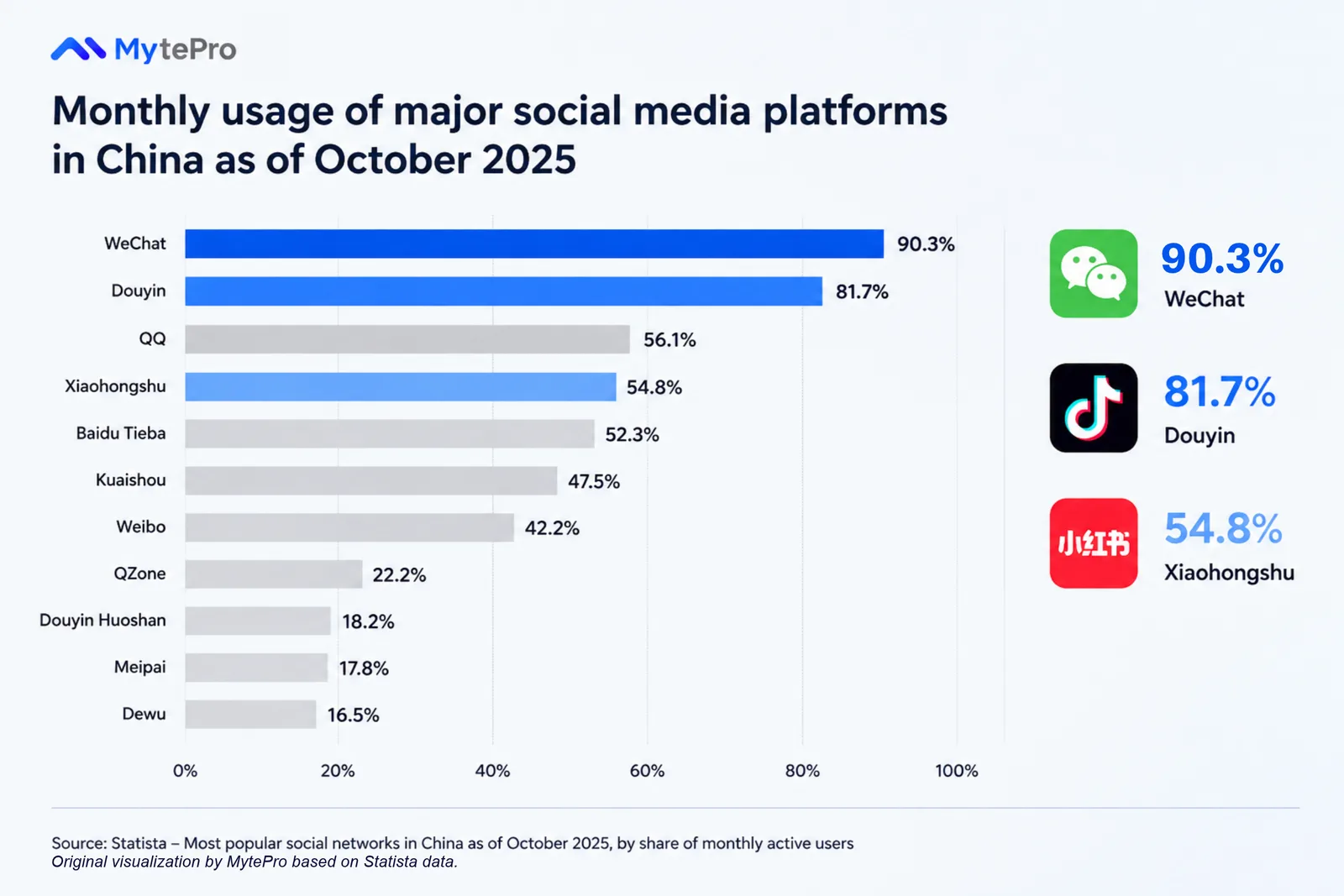
Based on a survey done by Statista in 2026, in the Chinese landscape, three giant players of social platforms dominate the market: 90.3% uses WeChat, 81.7% scrolls on Douyin, and 54.8% posts on Xiaohongshu. These three mediums, Xiaohongshu in particular, has become influential for lifestyle-led content where visual storytelling, personal recommendations and experiences shape public perception. For property developers, this means a brochure translated into Chinese is far from catching attention. Content must be adapted to the platform, the audience characteristics, and the stage of the buyer journey.
A prospective buyer may first encounter a development through a short video about neighbourhood lifestyle. They may then look for project details, review comments, save and share content with family and finally contact an agent only after repeated exposure. Here, it is important to note that each interaction contributes to buyer confidence.
From visibility to qualified demand
This is where social media becomes more than a communications exercise. A consistent content strategy can help an overseas developer build recognition, clearly explain a project’s value and create a steady flow of qualified enquiries among Chinese audiences.
Achieving that requires more than occasional posting. It involves localised content production, platform-specific creative, community management, paid amplification, performance tracking and an understanding of how Chinese buyers move from awareness to serious consideration.
The developers best positioned to capture this opportunity will be those that treat Chinese digital engagement as part of their international sales strategy, rather than as a separate marketing experiment.
Chinese buyers matter because they bring capital, mobility and global influence to overseas property markets. At the same time, they also bring higher expectations for clarity, relevance and trust. Developers that understand where these buyers spend time online, and know how to communicate with them in the right way, will have a better advantage in turning visibility to meaningful demand.
Source:
- Australian Treasury. Department of the Treasury Annual Report 2024–25, Table 54.
- Malay Mail. “Juwai IQI: Malaysia among top destinations for Chinese property buyers, investment on track to top RM1.6b a year.” 1 September 2026.
- Knight Frank. “Who’s Buying Where?” 2025. Research cited in Jing Daily’s May 2025 analysis.
- Statista. “Leading Social Network Sites in China.” 2026.