For property developers, the sales gallery has always been more than a showroom. It is where buyers form their first real impression of a project, where a future home becomes easier to imagine, and where interest can turn into confidence.
But today’s buyers are different. They research more before visiting. They compare more options. They don't just expect faster responses, but also richer information and a deeper understanding of what they are buying, especially when the property has not yet been built.
This is changing the role of the modern sales agent.
In a digitally connected sales gallery, a sales agent is no longer limited to presenting brochures, static renderings, or scale models. Instead, they leverage a range of digital tools and data-driven insights to better understand buyer interests, deliver more engaging property presentations, and support prospects throughout their decision-making journey. As a result, their day becomes more strategic and better informed, allowing them to focus on the opportunities that matter most.
9:00 AM — Starting the Day With Insightful Buyer Data
Before the first buyer enters the sales gallery, the sales agent starts the morning by reviewing the latest buyer insights.
Instead of manually checking scattered messages or spreadsheets, they open an AI analytics dashboard connected to the project’s digital property tour. The system shows which prospects have recently explored the virtual project experience, which units they viewed, how long they stayed, which floorplans attracted their attention, and which buyers showed stronger purchase intent.
Now, rather than treating every lead the same, they can prioritize the prospects who are most engaged. A buyer who repeatedly explored three-bedroom units with a sea view may need a different follow-up from someone who only viewed general project information. A prospect who returned to the same unit layout multiple times may be closer to making a decision than someone who only clicked once.
This shifts the sales process from guesswork to insight-driven engagement. More importantly, the system can help identify high-quality leads and send automated follow-up messages, ensuring that potential buyers are not lost simply because the sales team responded too late.
For developers, this is where digital tools begin to support not only marketing visibility, but also sales conversion.
11:00 AM - Increasing Buyer Understanding & Confidence Through Immersive Property Experience
Later, a couple arrives at the sales gallery. In a traditional setting, the sales agent might walk them through a scale model, printed floorplans, and a set of renderings. While useful, they often leave buyers with unanswered questions.
What will the living room actually feel like?
How does the view change from one floor to another?
What is the difference between two unit layouts?
How does the project connect with its surrounding area?
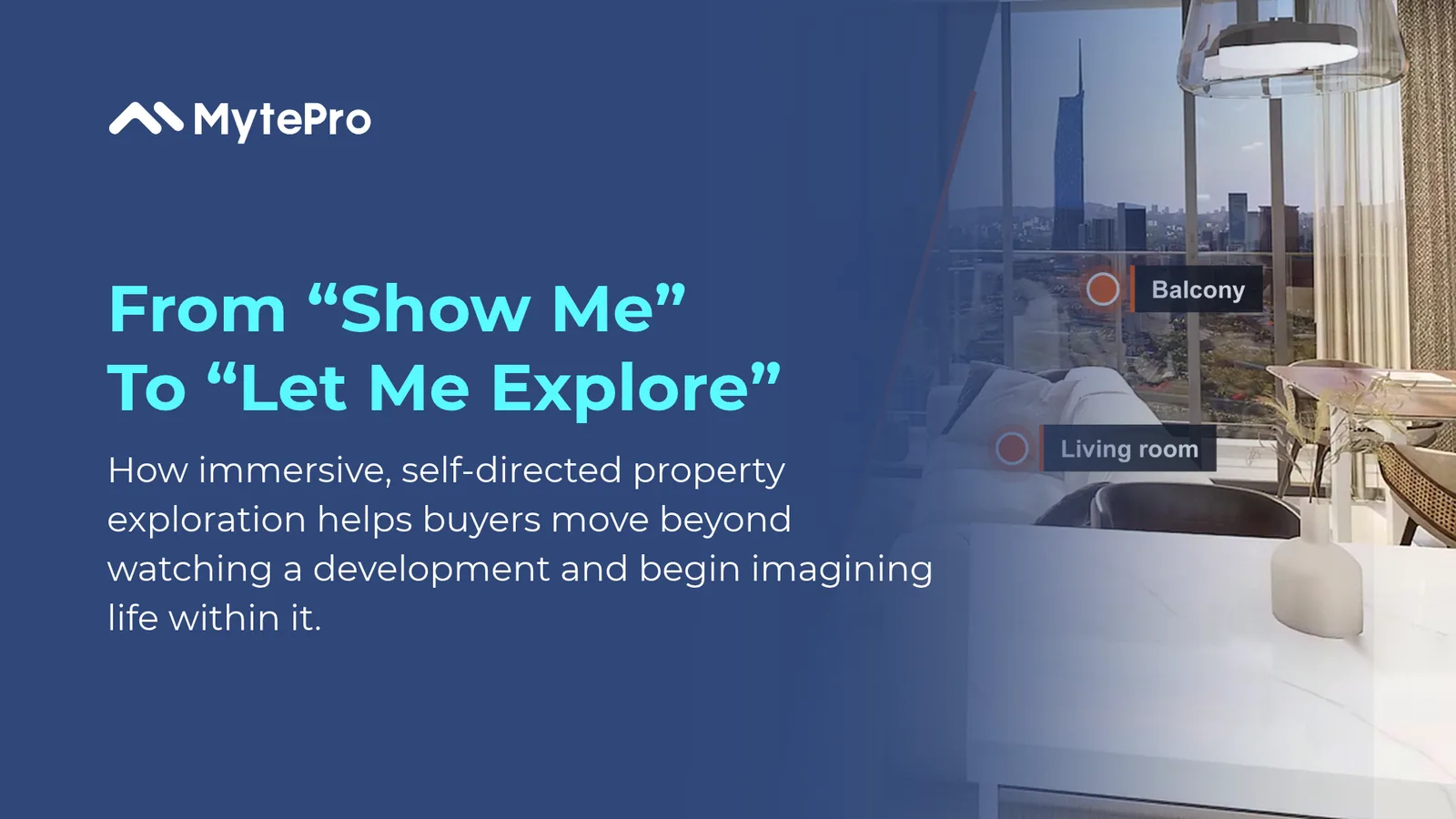
In a smart sales gallery, the agent can guide the buyers through an immersive virtual property tour displayed on a giant LED screen. Instead of looking at still images, buyers can step into a more realistic project experience. They can move through the property, explore every angle, understand the layout, and visualize the lifestyle the development is designed to offer.
This type of presentation is especially valuable for off-plan projects. When the physical building does not yet exist, buyers need more than imagination. They need clarity.
The experience does not end when they leave the gallery. The same property tour can be shared through a link and accessed on multiple devices, allowing buyers to revisit the project at home, discuss options with family members, and continue their research.
For a sales agent, this creates a more continuous buyer journey. The gallery visit becomes the beginning of a digital interaction, not a one-time presentation.
2:00 PM — Engaging Online Buyers Through AI Livestreaming
Not every buyer can visit the sales gallery in person. Some may be overseas investors, while others may prefer to continue their research remotely before committing to a visit.
This is where AI livestreaming can extend the reach of the sales gallery.
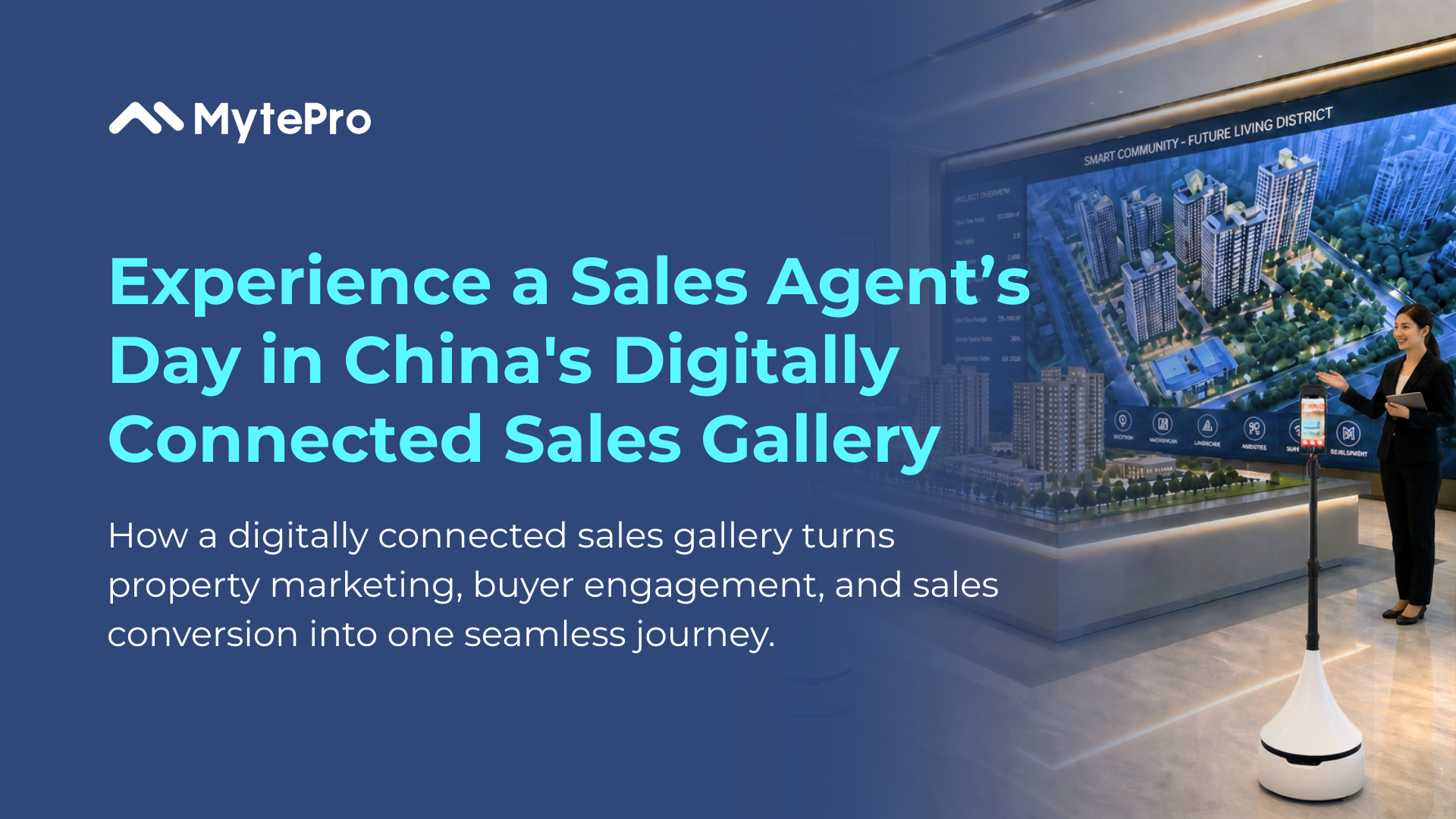
Moving through the space, this AI livestreaming robot can guide remote, online audiences throughout the sales gallery, highlighting a project's key features with customized scripts, smartly responding to viewer's requests and questions in the comments, all to create a more engaging viewing experience.
For developers, this opens up a stronger connection between offline and online channels. The physical sales gallery is no longer limited to visitors who walk through the door. Instead, it is a broadcastable, shareable, and interactive marketing asset.
For the sales agent, it also creates new opportunities. Online viewers who show interest during the livestream can be captured, qualified, and followed up with, becoming a part of the lead generation and nurturing process.
 By the afternoon, the marketing team is preparing new campaign materials for the project.
Traditionally, producing real estate marketing materials requires significant time, budget, and coordination across multiple teams. As a result, videos, visuals, presentations, and social media content are often created separately, adding complexity and required effort to the whole process.
In a digitally connected sales gallery, the digital project environment itself can become a reusable content engine.
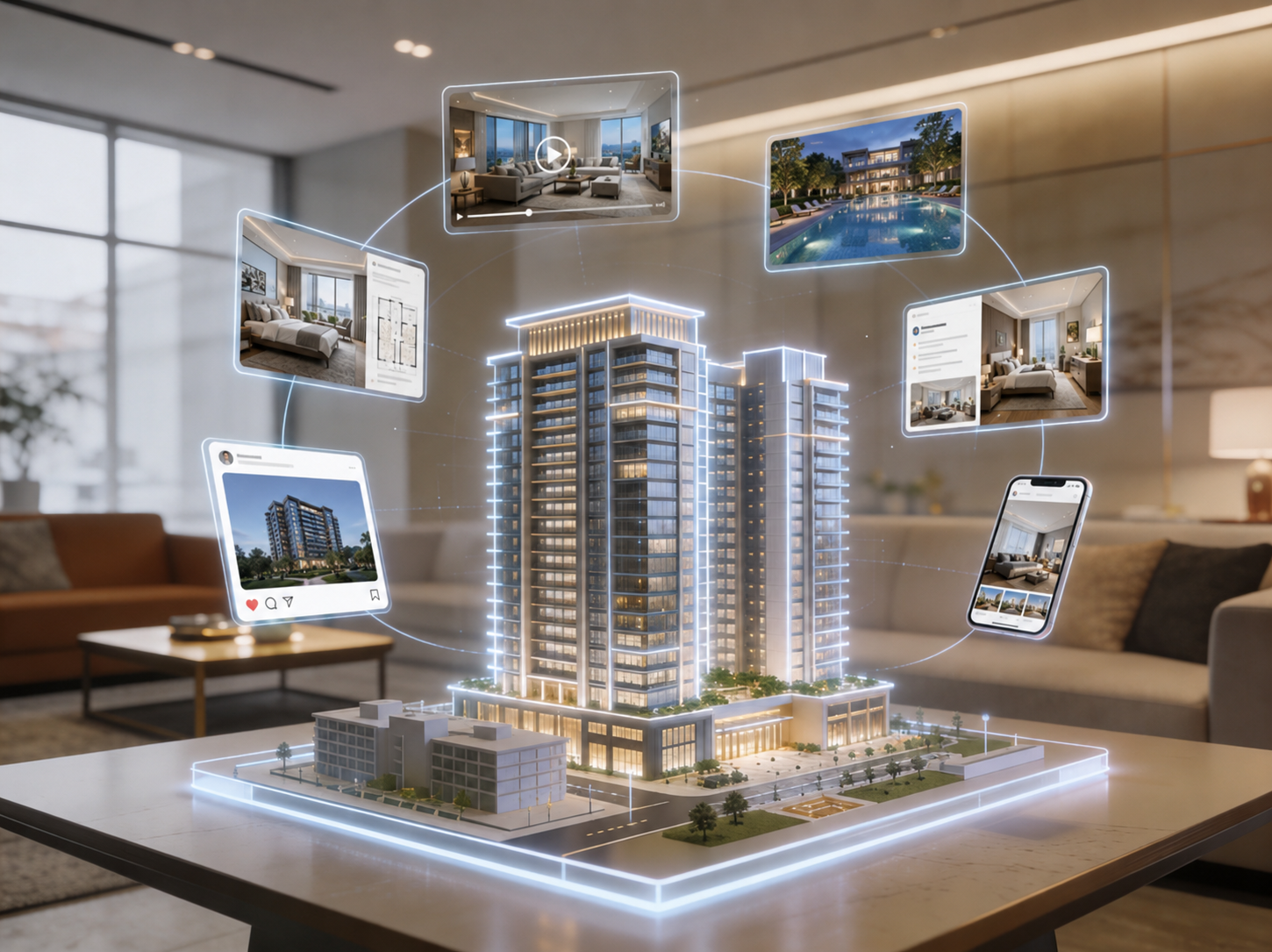
AI-powered content creation tools can help developers turn digital galleries into various marketing assets. A virtual project environment can support social media content, campaign visuals, presentation materials, and buyer-facing digital experiences. Cinematic property tours can also be generated more efficiently, helping marketing teams produce richer content without starting from scratch every time.
When campaigns need fresh content, sales teams need updated materials, and buyers need clearer project information, a connected digital asset system will help developers create more value from the same project environment with great speed and consistency.
By the afternoon, the marketing team is preparing new campaign materials for the project.
Traditionally, producing real estate marketing materials requires significant time, budget, and coordination across multiple teams. As a result, videos, visuals, presentations, and social media content are often created separately, adding complexity and required effort to the whole process.
In a digitally connected sales gallery, the digital project environment itself can become a reusable content engine.
AI-powered content creation tools can help developers turn digital galleries into various marketing assets. A virtual project environment can support social media content, campaign visuals, presentation materials, and buyer-facing digital experiences. Cinematic property tours can also be generated more efficiently, helping marketing teams produce richer content without starting from scratch every time.
When campaigns need fresh content, sales teams need updated materials, and buyers need clearer project information, a connected digital asset system will help developers create more value from the same project environment with great speed and consistency.
9:00 AM — Starting the Day With Insightful Buyer Data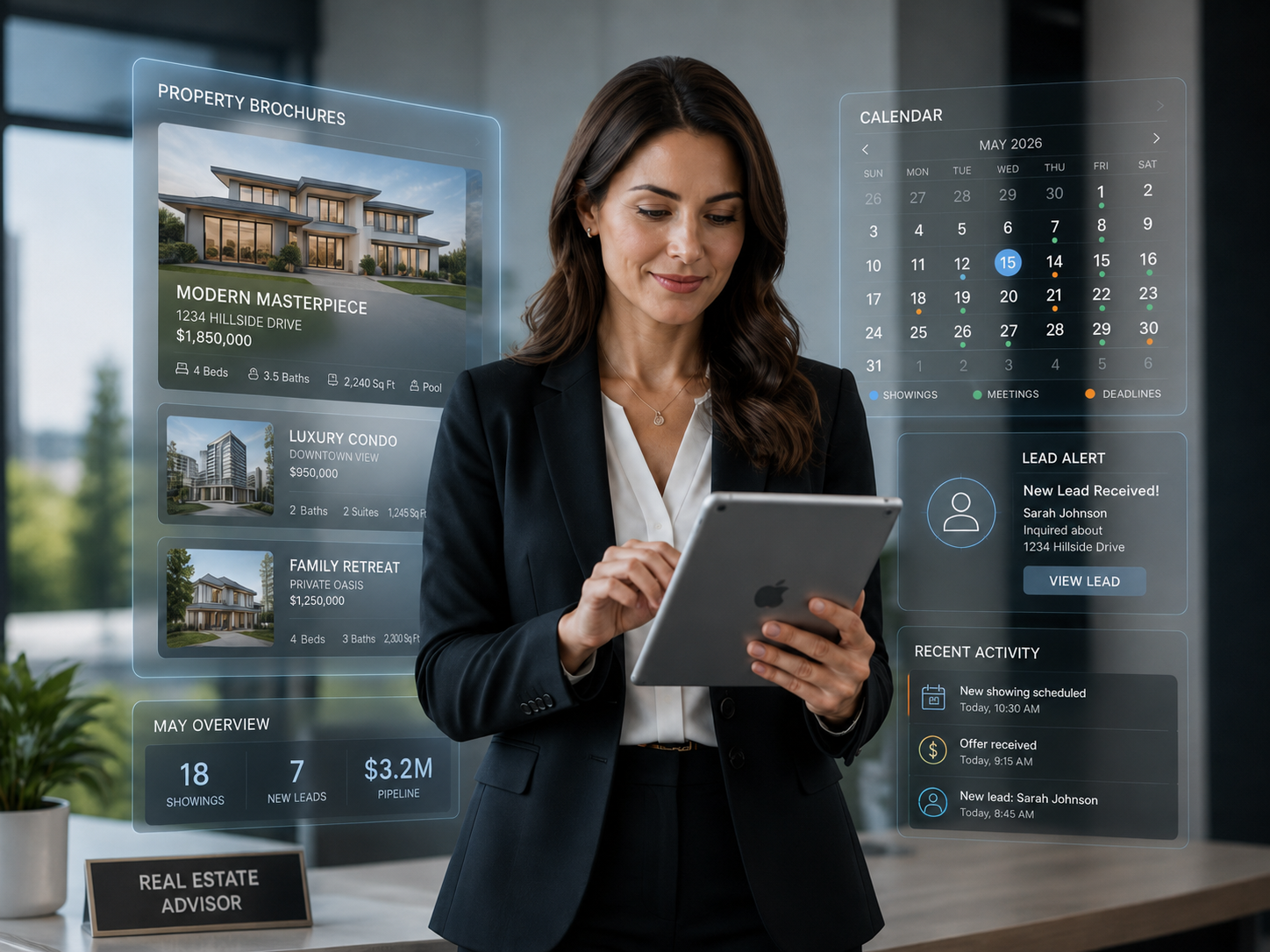
Before the first buyer enters the sales gallery, the sales agent starts the morning by reviewing the latest buyer insights.
Instead of manually checking scattered messages or spreadsheets, they open an AI analytics dashboard connected to the project’s digital property tour. The system shows which prospects have recently explored the virtual project experience, which units they viewed, how long they stayed, which floorplans attracted their attention, and which buyers showed stronger purchase intent.
Now, rather than treating every lead the same, they can prioritize the prospects who are most engaged. A buyer who repeatedly explored three-bedroom units with a sea view may need a different follow-up from someone who only viewed general project information. A prospect who returned to the same unit layout multiple times may be closer to making a decision than someone who only clicked once.
This shifts the sales process from guesswork to insight-driven engagement. More importantly, the system can help identify high-quality leads and send automated follow-up messages, ensuring that potential buyers are not lost simply because the sales team responded too late.
For developers, this is where digital tools begin to support not only marketing visibility, but also sales conversion.
11:00 AM - Increasing Buyer Understanding & Confidence Through Immersive Property Experience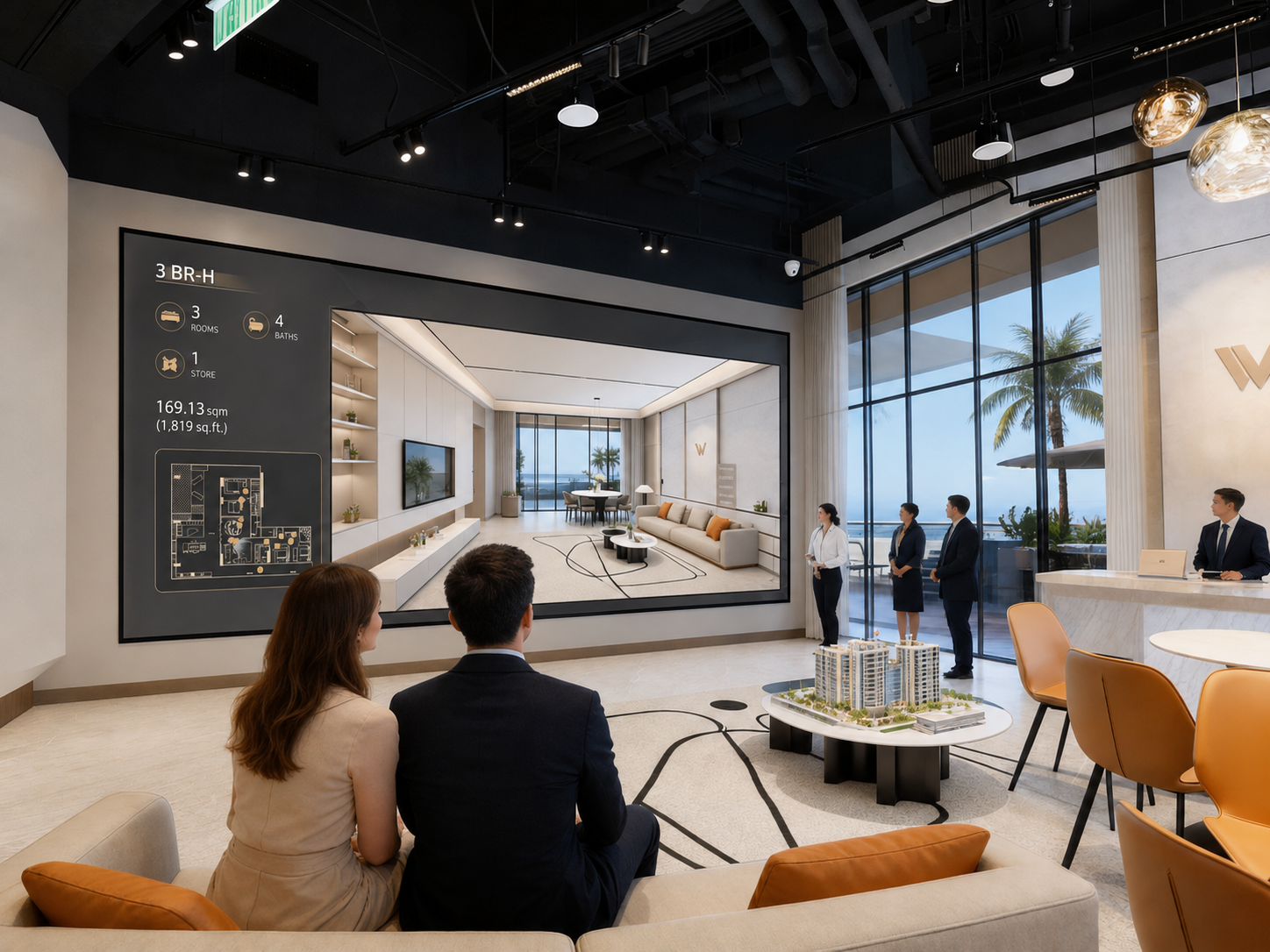
Later, a couple arrives at the sales gallery. In a traditional setting, the sales agent might walk them through a scale model, printed floorplans, and a set of renderings. While useful, they often leave buyers with unanswered questions.
What will the living room actually feel like?
How does the view change from one floor to another?
What is the difference between two unit layouts?
How does the project connect with its surrounding area?
In a smart sales gallery, the agent can guide the buyers through an immersive virtual property tour displayed on a giant LED screen. Instead of looking at still images, buyers can step into a more realistic project experience. They can move through the property, explore every angle, understand the layout, and visualize the lifestyle the development is designed to offer.
This type of presentation is especially valuable for off-plan projects. When the physical building does not yet exist, buyers need more than imagination. They need clarity.
The experience does not end when they leave the gallery. The same property tour can be shared through a link and accessed on multiple devices, allowing buyers to revisit the project at home, discuss options with family members, and continue their research.
For a sales agent, this creates a more continuous buyer journey. The gallery visit becomes the beginning of a digital interaction, not a one-time presentation.
2:00 PM — Engaging Online Buyers Through AI Livestreaming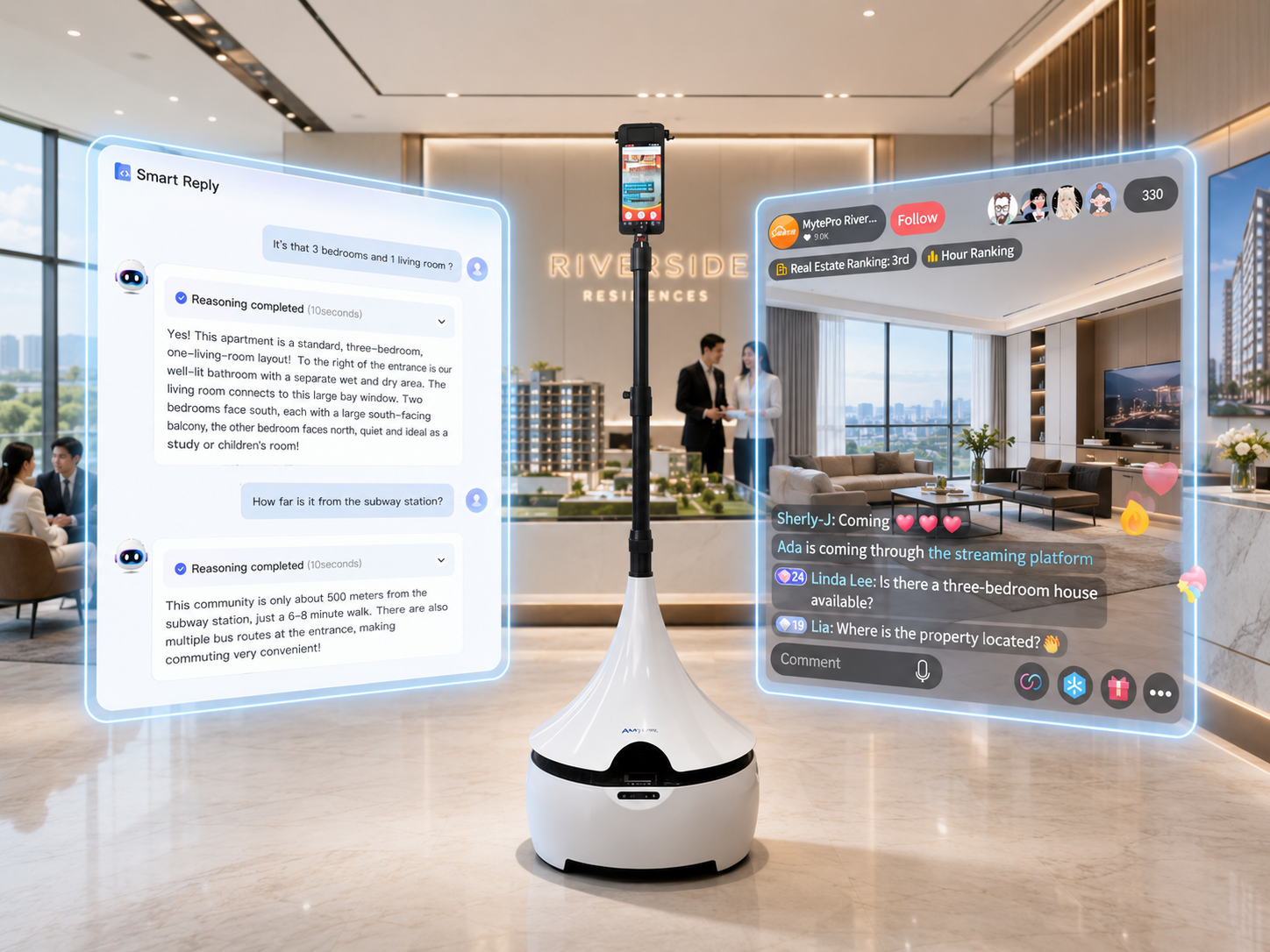
Not every buyer can visit the sales gallery in person. Some may be overseas investors, while others may prefer to continue their research remotely before committing to a visit.
This is where AI livestreaming can extend the reach of the sales gallery.
Moving through the space, this AI livestreaming robot can guide remote, online audiences throughout the sales gallery, highlighting a project's key features with customized scripts, smartly responding to viewer's requests and questions in the comments, all to create a more engaging viewing experience.
For developers, this opens up a stronger connection between offline and online channels. The physical sales gallery is no longer limited to visitors who walk through the door. Instead, it is a broadcastable, shareable, and interactive marketing asset.
For the sales agent, it also creates new opportunities. Online viewers who show interest during the livestream can be captured, qualified, and followed up with, becoming a part of the lead generation and nurturing process.
4:00 PM — Turning One Digital Gallery Into Multiple Marketing Assets
By the afternoon, the marketing team is preparing new campaign materials for the project.
Traditionally, producing real estate marketing materials requires significant time, budget, and coordination across multiple teams. As a result, videos, visuals, presentations, and social media content are often created separately, adding complexity and required effort to the whole process.
In a digitally connected sales gallery, the digital project environment itself can become a reusable content engine.
AI-powered content creation tools can help developers turn digital galleries into various marketing assets. A virtual project environment can support social media content, campaign visuals, presentation materials, and buyer-facing digital experiences. Cinematic property tours can also be generated more efficiently, helping marketing teams produce richer content without starting from scratch every time.
When campaigns need fresh content, sales teams need updated materials, and buyers need clearer project information, a connected digital asset system will help developers create more value from the same project environment with great speed and consistency.