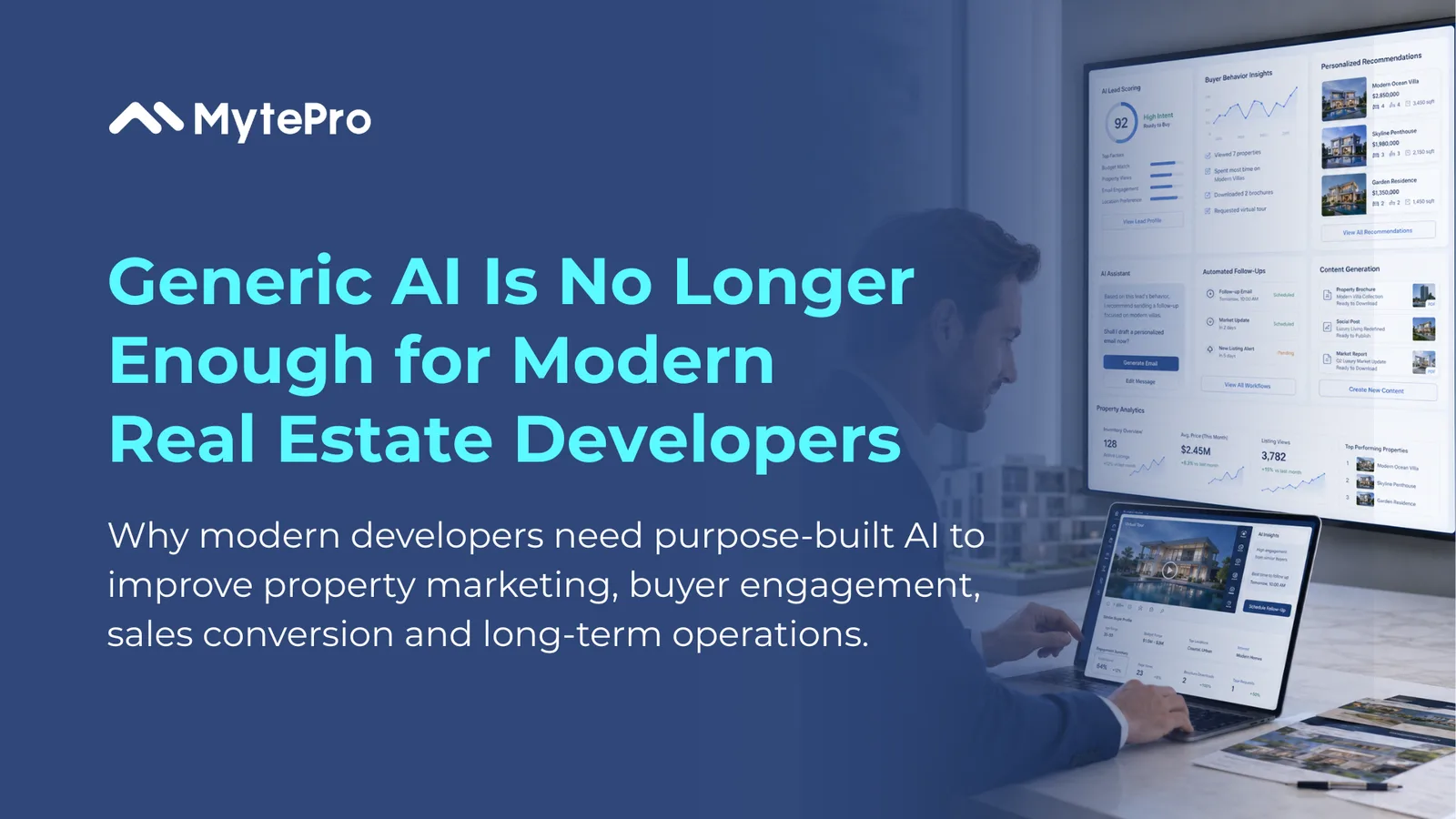
Generic AI Is No Longer Enough for Modern Real Estate Developers
The industry has adopted AI, but mostly at a surface level
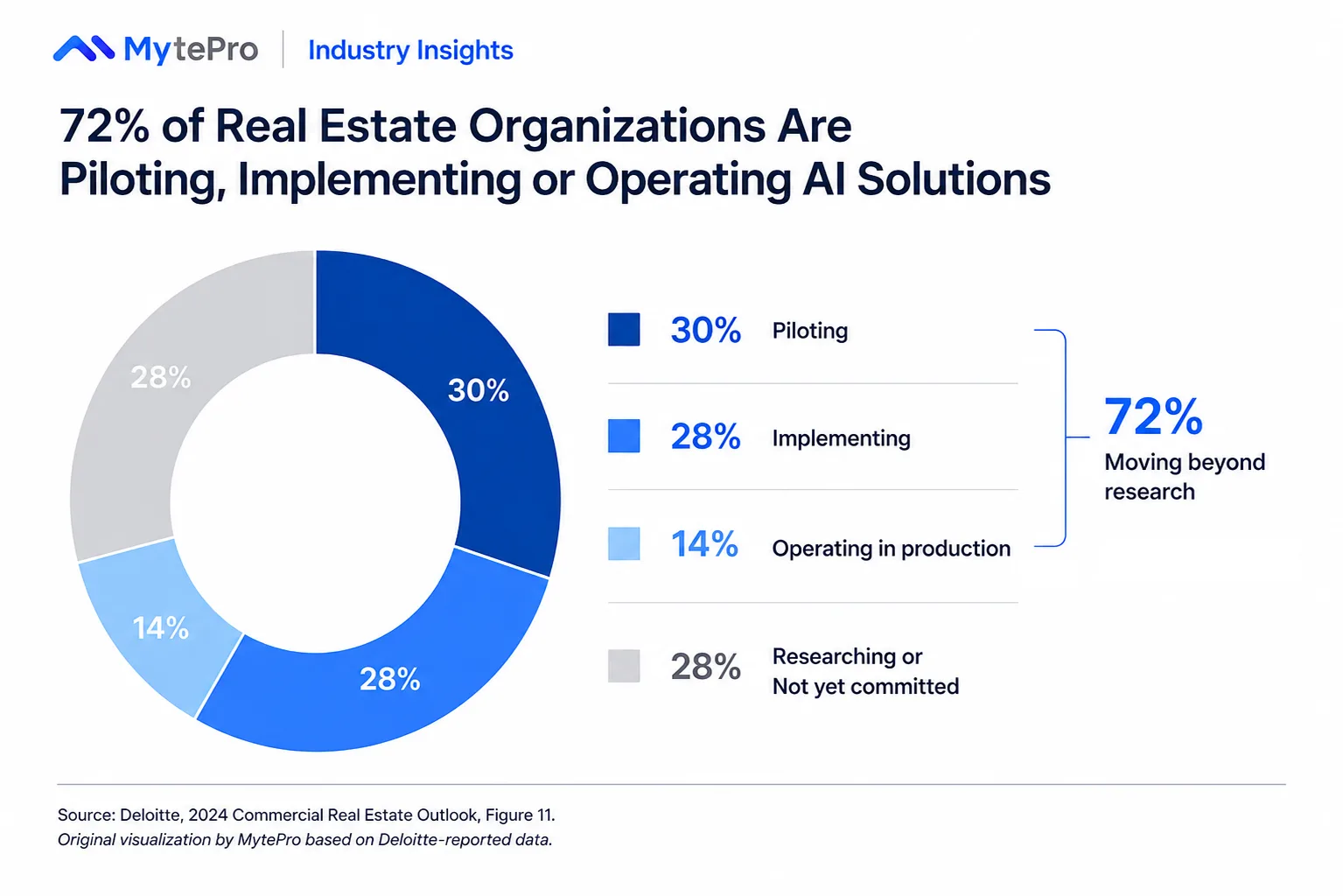
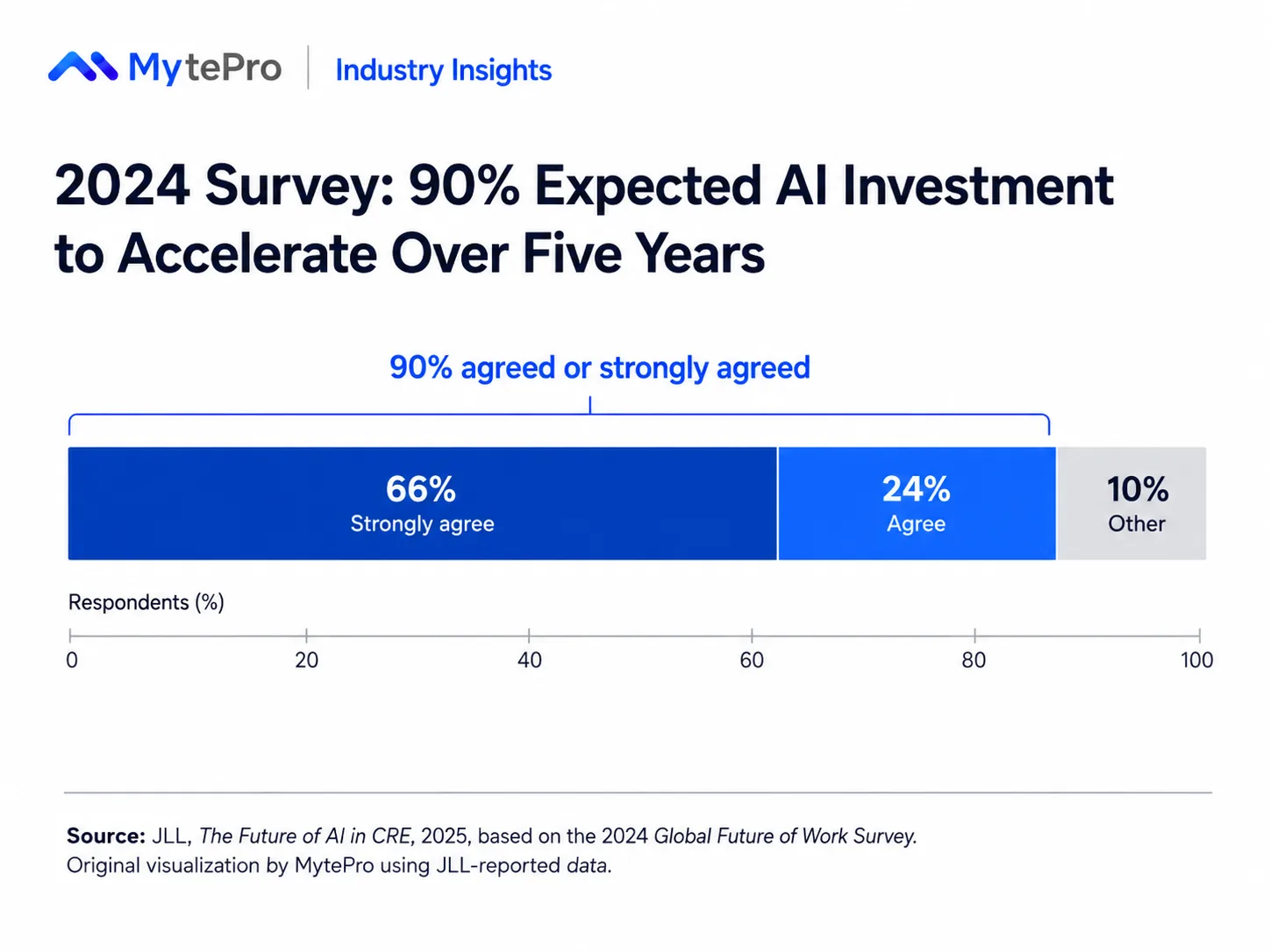
Artificial intelligence has moved quickly from experimentation to a boardroom priority across real estate. Deloitte’s 2024 Commercial Real Estate Outlook found that 72% of surveyed real estate owners and investors were already piloting, implementing or operating AI-enabled solutions. JLL's research in 2024 also reported that 90% of corporate real estate leaders believe AI can help solve major industry challenges.
Yet adoption does not necessarily equal maturity. JLL’s 2025 Global Real Estate Technology Survey found that the proportion of corporate real estate teams piloting AI, or planning to begin doing so, had risen from less than 5% in 2023 to 92% in 2025. However, only 5% reported achieving most of their AI programme goals, suggesting that experimentation remains far more common than meaningful implementation.
Many developers now use general-purpose AI to draft property descriptions, translate brochures or summarize documents. These applications improve productivity, but they represent the most basic layer of AI adoption. The bigger question is whether the technology can support the actual work of presenting, selling and operating a property.
Why generic AI reaches its limits in real estate
Generic AI responds to broad prompts. Real estate, however, is built around highly specific decisions, processes and customer journeys.
Selling an off-plan development is not simply a content-generation exercise. Buyers must understand a property that may not yet exist, compare units, assess its location and lifestyle value, and gain enough confidence to make a high-value commitment. Sales teams must interpret buyer interest, prioritize leads and respond at the right moment.
The complexity continues after the sale. Various property management tools involve specialized terminology and operational dependencies. A general chatbot may assist with isolated tasks, but it cannot operate these systems or manage the workflows that keep properties running efficiently.
Generic AI can produce an answer. Purpose-built AI is designed to move a real estate process forward.
The shift to purpose-built real estate AI
The next stage of adoption is not about abandoning general AI. It is about using industry-curated solutions where real estate knowledge and workflow depth matter.
McKinsey has identified applications for generative AI throughout the real estate value chain, including customer engagement, marketing content creation, investment analysis and building operations. Deloitte similarly highlights leasing, tenant management, property management, due diligence and market analytics as practical areas for AI adoption.
Purpose-built solutions are designed around the people using them, the decisions they make and the outcomes they own. Instead of forcing a generic tool into a specialist process, these systems embed AI directly into property marketing, buyer engagement, leasing, operations, cost management and compliance.
The distinction is significant: general-purpose AI helps users complete isolated tasks, while purpose-built AI is designed to improve specific real estate outcomes.
What purpose-built AI looks like across the property lifecycle
In property sales, a virtual property experience displayed on a sales-gallery LED wall can help buyers explore the development, its surroundings, facilities and unit interiors before construction is complete. The same experience can be opened on other devices or shared through a link, extending engagement beyond the physical gallery.
Connected AI analytics can reveal which properties, unit types or features a buyer explored most. It can identify stronger purchase intent, prioritize higher-quality leads and trigger timely follow-up. A sales agent could see which prospects require attention, what interested them and what action should come next, resulting in more data-accurate responses.
Purpose-built AI can also expand property marketing beyond the sales gallery. Real-estate-focused content tools can transform digital project experiences into reusable campaign assets, generate cinematic property tours and produce tailored marketing visuals and narratives for different buyer segments. Developers can create richer materials for multiple channels without rebuilding the project story for every campaign.

The same principle extends into operations. AI-enabled leasing platforms can automate enquiries, document handling and tenant communication. Facility-management systems can prioritize work orders, support predictive maintenance and surface recurring issues.
CBRE reports that its AI-enabled facilities management solutions have been deployed across one billion square feet and 20,000 sites. According to the company, these tools have helped clients achieve cleaning-cost savings of 10% to 20% and reduce repeat maintenance alarms by 98%. These outcomes demonstrate how industry-specific AI can move beyond administrative assistance to deliver measurable operational improvements.
Other purpose-built applications can consolidate scattered cost information, identify budget risks, review contracts for accuracy and compliance, or use AI agents to coordinate multiple property-management tasks. The value does not come from adding AI as another feature. It comes from embedding AI into a workflow with a defined business purpose.
The value does not come from adding AI as another feature. It comes from embedding AI into a workflow with a defined business purpose.
A roadmap for more mature AI adoption
For more effective AI adoption, developers can follow four practical steps.
First, prioritize the business problem, not the technology. Focus on areas with the greatest commercial impact, such as slow lead follow-up, inefficient leasing or fragmented cost management. A clear problem makes it easier to assess value.
Second, adopt a purpose-built solution. Choose tools designed for specific real estate workflows rather than adapting general-purpose AI. The goal is to use the right solution for the task.
Third, integrate the solution into existing workflows. AI delivers more value when connected to what happens before and after its core function, such as linking buyer activity to sales follow-up or leasing to tenant services.
Finally, scale through a coordinated ecosystem. Expand AI across the property lifecycle using compatible, purpose-built solutions that work together without needing to build your own infrastructure.
Moving AI closer to the real estate business
General-purpose AI will remain useful. But it should not be mistaken for a complete real estate AI strategy.
The next stage of adoption will not be defined by how many generic tools a developer uses. It will be defined by how closely purpose-built intelligence is embedded into the way projects are presented, buyers are understood, leads are converted, costs are controlled and properties are operated.
For modern developers, the competitive question is no longer whether to use AI, but whether their AI truly understands real estate.
Sources
● Deloitte. 2024 Commercial Real Estate Outlook. Deloitte Insights, 2024.
● JLL. “The Future of AI in CRE.” JLL Research, 2025.
● JLL. “Reality Check: The True Pace and Payoffs of AI Adoption in Corporate Real Estate.” Global Real Estate Technology Survey 2025, JLL Research, 2025.
● McKinsey & Company. “Generative AI Can Change Real Estate, but the Industry Must Change to Reap the Benefits.” McKinsey & Company, 2023.
● CBRE. “Where AI Becomes Real.” CBRE, accessed July 2026.