A buyer sits in a sales gallery watching the launch video.
The camera glides through the lobby, past the pool and into the show unit. Then it ends.
The buyer turns to the sales consultant and asks:
“Can we go back to the living room? I want to take another look at the space.”
The video can replay, but it cannot respond to the buyer’s curiosity. It was created to tell one story, in one sequence, at one pace.
And that highlights an important shift in how property is being presented today.
Buyers still want developers to show them the project. But increasingly, they also want the freedom to explore it for themselves.
Every Format Tells a Story. But Who Is Telling It?
Brochures, launch videos, renders and floor plans remain essential parts of property marketing.
They allow developers to control the narrative, establish the positioning of a project and give every prospect a consistent, polished first impression. They are also highly shareable, making them particularly effective for building awareness.
But these are curated experiences. The developer decides what the buyer sees, in what order and for how long.
Yet buyers rarely evaluate a home in the same way.
One might start with the facilities. Another wants to understand the living space. A family may immediately look at the bedrooms, while another buyer may be more interested in the view or surrounding neighbourhood.
When something catches their attention, they naturally want to look closer, go back or change direction.
Their curiosity doesn’t always follow the presentation.
What Changes When the Buyer Can Explore?
Immersive presentation changes that dynamic.
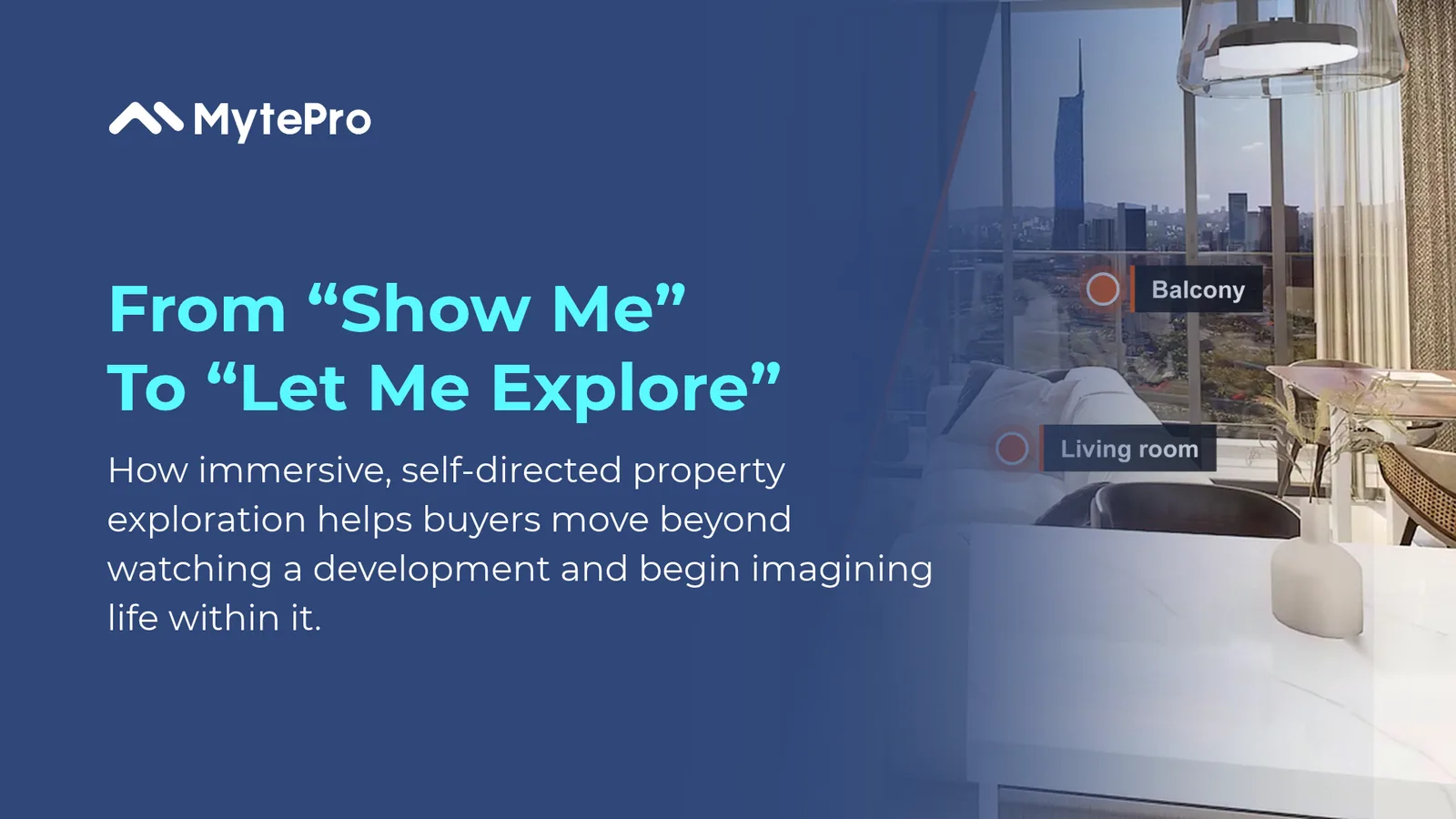
Instead of following a predetermined route, buyers can decide what they want to explore — moving from the wider development into a tower, a unit or the facilities, and spending more time on what matters to them.
If they want to return to the living room, they can.
If they want to compare different spaces, they can.
If they want to understand the journey from the lift lobby to their front door, they can experience it rather than simply imagine it.
This is the thinking behind MytePro Immersive Twin: giving buyers greater freedom to explore an unbuilt development rather than simply watch it.
The difference may seem subtle, but it changes the buyer’s role.
They are no longer only watching someone else’s presentation.
They are participating in their own discovery of the project.
A Different Kind of Sales Conversation
This can change the sales conversation too.
Instead of spending the entire conversation presenting information in a fixed sequence, the sales consultant can become more of a guide — helping buyers explore the areas most relevant to them and responding to what catches their attention.
The questions can become more personal.
Instead of: “Tell me about the living room.”
It might become: “Would our sofa fit here?”
That is a very different conversation.
The buyer is no longer simply processing information about the development. They have started imagining themselves living there.
Curated and Immersive Don’t Have to Compete
None of this means replacing the brochure, launch video, render or floor plan.
The opportunity is to give each format a clearer role across the buyer journey.
Awareness: Brochures, launch videos, renders and social content introduce the development and build initial interest.
Consideration: Interactive and immersive experiences allow buyers to explore the development on their own terms.
Decision: Buyers can revisit the project, discuss it with family members and return to the areas that matter most before making a decision.
The strongest property presentation may therefore not be a choice between curated storytelling and exploration.
One establishes the story. The other lets the buyer make that story their own.
From Viewers to Explorers
The shift from “show me” to “let me explore” is not about abandoning the formats that have served property marketing well for years.
It is about recognizing that buyers can play a more active role in how they discover and evaluate an unbuilt home.
Brochures and videos will continue to open the conversation.
But when a buyer asks to go back to the living room, the developers who can say “of course — go ahead” are giving buyers something fundamentally different:
The freedom to explore before the building even exists.